If you’re headed to Everest Base Camp and want to avoid the nail-biting weather delays and chaotic early-morning queues at the domestic terminal in Kathmandu, here’s some good news: You can trek to EBC without flying to Lukla.
The overland route to Surke via Salleri is a rugged, immersive, and increasingly popular option. It might add a few days to your trip, but it adds a whole new layer of adventure, culture, and acclimatization to the classic Everest trek.
Let’s break it all down.
Why Choose the Overland Route Instead of Flying to Lukla?
-
No flight stress: Lukla flights are frequently canceled or delayed due to weather. Overland travel is more reliable.
-
Gradual altitude gain: Perfect for acclimatization, reducing your risk of altitude sickness.
-
Rich cultural immersion: You’ll pass through remote villages and see a side of Nepal most trekkers miss.
-
Save money on flights: Jeep rides are significantly cheaper than round-trip flights to Lukla.
-
More adventure: The road to Surke is wild and dramatic, like an Indiana Jones prologue before the main trek.
Overland Route Overview: Kathmandu → Salleri → Surke
1. Kathmandu to Salleri
-
Distance: 270 km
-
Time: 10–12 hours by jeep
-
Departure Point: Chabahil or New Bus Park (Gongabu), Kathmandu
-
Departure Time: Between 4:30 AM and 6:00 AM
-
Cost:
-
Shared Jeep: NPR 3,000–4,000 per person
-
Private Jeep: NPR 25,000–35,000 per vehicle (7–8 seats)
-
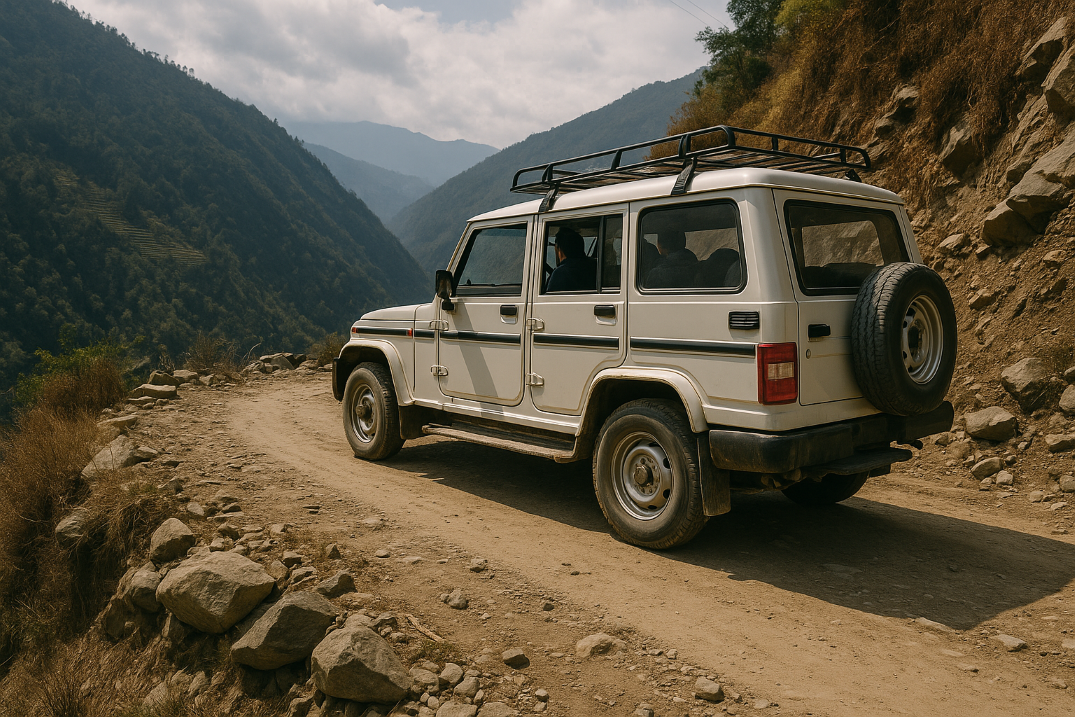
Expect a long, bumpy, and scenic ride. The road winds through beautiful hill towns like Okhaldhunga and passes through the heart of Solukhumbu district. Stops for meals and tea are frequent, and the views will keep your camera busy.
2. Salleri to Surke
-
Distance: 55 km
-
Time: 6–7 hours by jeep or bus
-
Road: Rough, unpaved, and narrow in many sections
-
Cost:
-
Shared Jeep: NPR 2,000–2,500 per person
-
Bus: NPR 700–1,000 per person
-
Surke lies just below Lukla and shares the same trails heading northward toward Phakding. You’ll bypass Lukla Airport altogether and dive straight into the trekking culture on foot.
Suggested Itinerary: From Kathmandu to EBC via Surke
This sample itinerary includes acclimatization stops, moderate trekking durations, and a day-by-day progression toward Everest Base Camp.
Day 1: Drive from Kathmandu to Salleri
-
Overnight: Local lodge or guesthouse in Salleri
-
Tip: Carry motion sickness pills – it’s a long ride.
Day 2: Jeep from Salleri to Surke
-
Overnight: Basic lodge in Surke
-
Tip: Start early to avoid road delays.
Day 3: Trek from Surke to Phakding
-
Walking time: 4–5 hours
-
Trail: Forested paths, gradual ups and downs
-
Altitude: ~2,610 m
-
Tip: Take it slow – your body’s still adjusting.
Day 4: Phakding to Namche Bazaar
-
Walking time: 6–7 hours
-
Altitude: ~3,440 m
-
Highlight: Crossing high suspension bridges, first Everest views
Day 5: Acclimatization Day in Namche
-
Hike up to Hotel Everest View or Khumjung
-
Explore museums and bakeries
-
Tip: Don’t skip this day – it’s essential for your health
Day 6: Namche to Tengboche (3,860 m)
-
Epic views of Ama Dablam and Everest
-
Visit the iconic Tengboche Monastery
Day 7: Tengboche to Dingboche (4,410 m)
Day 8: Acclimatization Day in Dingboche
-
Short hike to Nangkartshang Peak (~5,000 m) if you’re feeling good
Day 9: Dingboche to Lobuche (4,910 m)
Day 10: Lobuche to Gorakshep (5,140 m), hike to EBC (5,364 m)
-
Bucket list moment!
-
Return to Gorakshep to sleep
Day 11: Early hike to Kala Patthar (5,545 m) for sunrise views of Everest, then trek down to Pheriche
Day 12–14: Trek back to Surke or Lukla (optional) and take the overland route back
Reaching Back: Surke to Kathmandu Return Options
-
Option 1: Trek back the same way to Surke, then jeep to Kathmandu via Salleri
-
Option 2: Trek to Lukla and fly back (if flights are running and you’re willing to try)
-
Option 3: Continue on a longer route via Gokyo, Cho La Pass, or Three Passes if you have time
Travel Tips for Overland EBC
-
Book your jeep in advance, especially in March–May and September–November
-
Check weather forecasts even for road travel — landslides and blockages are common
-
Download maps offline on apps like Maps.me or Gaia GPS
-
Always carry cash (NPR) — there are no ATMs after Salleri
-
Carry snacks and water for the jeep ride — it’s long and bumpy
Packing Essentials
-
Warm sleeping bag (rated to at least -10°C)
-
Trekking poles, especially helpful on descent
-
Headlamp, extra batteries
-
Down jacket, thermals, gloves, hat
-
Trekking boots already broken-in
-
First-aid kit and meds for AMS
-
Reusable water bottles and purification tablets
-
Rain jacket and covers for gear
Budget Breakdown (Approximate Per Person)
| Segment | Mode | Cost (NPR) |
|---|---|---|
| Kathmandu to Salleri | Shared Jeep | 3,000–4,000 |
| Salleri to Surke | Shared Jeep | 2,000–2,500 |
| Daily Lodge Stay | Teahouse | 700–1,500/day |
| Food and Drinks | On trail | 2,000–3,000/day |
| Trekking Permits | TIMS + National Park | ~5,000 |
| Guide/Porter (optional) | Agency/Direct | Varies |
| Return Transport | Jeep/Flight | 3,000–8,000 |
Final Thoughts
Trekking to Everest Base Camp via Surke and Salleri is not just an alternative — it’s a hidden gem of an experience. You’ll see more of rural Nepal, gain better acclimatization, and enjoy a more authentic Himalayan journey before even stepping foot on the classic EBC trail.
So if you’ve got the time, the curiosity, and the spirit for offbeat paths, skip the Lukla flight and embrace the adventure overland. The mountains will be waiting, just as grand — and maybe even more rewarding — at the end of this longer, richer road.