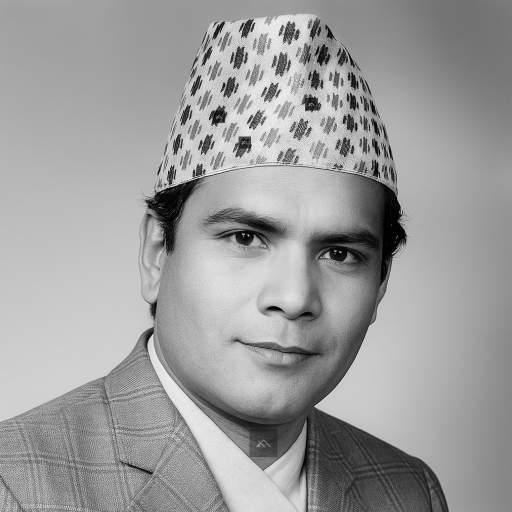
 If you were walking down Freak Street in Kathmandu in the early 1970s, you would have smelled it before you saw it. Not the yak butter tea stalls or the incense curling from temple courtyards, but the unmistakable, sticky-sweet aroma of Nepalese hashish. At the center of it all, presiding like a king over his smoky kingdom, was one man: D.D. Sharma, owner of the legendary Eden Hashish Shop.
For those who were there, Sharma was more than a businessman. He was a figure woven into the very fabric of Kathmandu’s hippie era. For those who were not, this is the story of a time when Kathmandu was the end of the road, hash was legal, and a good share of the world’s free spirits found themselves here, often for longer than they ever intended.
The Hippie Trail and Nepal’s Cannabis Paradise
In the 1960s and 1970s, waves of young travelers left Europe in search of adventure, enlightenment, and freedom. The route they followed became known as the Hippie Trail, stretching from Europe through Turkey, Iran, Afghanistan, Pakistan, and India, before ending in Nepal.
Nepal was more than just mountains and monasteries. It was one of the few countries where cannabis and hashish were completely legal. This was not a hidden practice or an ignored law; the Nepalese government issued licenses to hashish shops. These places operated openly, with signs outside and receipts inside.
One old traveler described it simply: “Places like Kathmandu were like a Mecca for pot lovers.”
And among all the licensed shops, one stood out: the Eden Hashish Shop, run by the charismatic and sometimes controversial D.D. Sharma.

Eden Hashish Shop: A Social Hub in a Smoky Kingdom
Sharma’s Eden was more than just a store. Upstairs, the attic was filled with cushions and low tables, where travelers would pass chillums, sample “tolas” of hash, and sometimes get too high to buy anything.
“My mate and I used to go upstairs and sample different tolas in the shop chillum, then get too stoned to make a purchase, absolutely no problem to the owner. I’m pretty sure it was where I saw 1kg blocks of blonde Nepalese hash stacked up in the corner, $20 each.”
For those staying at the Eden Hotel, buying hash was even easier. “I lived in the hotel for a month in 1972 with my wife. I just pounded on the floor and they sent up a kid to take my order and return a minute later with what I wanted.”
Sharma was not just selling a product; he was building a community. Many of his customers were not just casual smokers but adventurers with bigger plans. Keys of hash would be pressed into bricks in the attic, then packed into false-bottom suitcases for trips to Goa, Australia, or the United States.
“Bought 10 keys in 1970 to smuggle from the owner Sharma, spent the evening with him in the attic smoking chillums while his bachas pressed my temple balls into bricks. Got so stoned I thought I was dosed on acid.”
Kathmandu was the heart of this trade, and Eden was one of its beating chambers. But this golden age was about to end.

The Day the Smoke Began to Clear
In 1972, Nepal’s long-standing acceptance of cannabis began to crumble. King Mahendra passed away, and his son King Birendra ascended to the throne. While Nepal had deep cultural ties to cannabis use, particularly during the festival of Shivaratri, political pressures were mounting from outside.
President Richard Nixon had declared a War on Drugs, and the newly formed DEA was pressuring countries around the world to outlaw cannabis. Nepal was offered 50 to 70 million dollars in aid to criminalize it, a deal the new king accepted.
One traveler remembered it well:
“Richard Nixon and his recently formed DEA paid the new king 50-70 million dollars to outlaw pot in a Hindu country where everyone must take cannabis once a year on Lord Shiva’s birthday. Hippies were deported to India. It was a sad day on Freak Street.”
By 1975, the hashish shop signs had vanished. The trade continued, but in whispers rather than songs. The atmosphere that had drawn travelers from every corner of the world was gone. Many left for Goa or returned home. Freak Street, once the epicenter of counterculture in Asia, fell quiet.
The Fall of D.D. Sharma
For Sharma, the end came swiftly and sharply. A 10-kilogram shipment of hashish hidden in furniture bound for the United States was busted at Kathmandu airport.
“I was in the airport in Kathmandu when they busted a 10kg hashish hidden in furniture going to America and the exporters. Rumors said Sharma had informed on them.”
Whether the rumors were true or not, Sharma was expelled from Nepal and went into exile in Varanasi, India. The man who had once been the king of Freak Street’s hash trade disappeared from the scene almost overnight.
Freak Street: Then and Now
Then: Freak Street in the early 70s was alive with barefoot travelers in tie-dye shirts, Tibetan traders in woolen chupas, and the occasional sadhu covered in ash. Hashish shops advertised their wares openly, and the street hummed with sitar music, laughter, and the sound of travelers sharing stories over sweet chai. If you needed a place to crash, there was always a cheap guesthouse upstairs from a hash shop.
Now: Walk down Freak Street today and you will see souvenir shops selling pashmina scarves, trekking agencies offering Everest packages, and quiet cafés serving cappuccinos instead of chillums. The air smells of masala tea, not hashish. It is still charming in its own way, but for those who remember the old days, it feels like a faded photograph — the colors still there, but the wild spirit gone.

The Memory Lives On
Today, Freak Street is a shadow of its former self. The smoke-filled attics are gone, replaced by shops and hotels catering to trekkers and domestic tourists. The Eden Hashish Shop exists only in the memories of those who knew it.
“I would have been considered a Hippie or Freak in those days, but today I am retired and spend my time relaxing with my wife and cat.”
Sharma’s legacy is complicated. Some remember him as a generous host, others as a sharp dealer, but all agree he was a defining figure of Kathmandu’s golden hippie days.
As one old traveler put it:
“P.S. we never called ourselves hippies back then, we were just ‘Freaks’.”
The era is gone, but for those who were there, the stories remain. Somewhere in the corners of their memories, the laughter, music, and sweet scent of Nepalese hash still drift through the air.