So you’re planning your epic trek to Everest Base Camp, and you’re mentally prepping for altitude, snow, yaks, and probably your personal best in stair climbing. But one thing keeps nagging at you—how much will it all cost on the trail? Especially when it comes to tea house stays and meals.
The internet loves throwing vague numbers around. “$25 a day!” “$60 per meal at Gorakshep!” “Everything’s free if you smile at the lodge owner!” (Spoiler: It’s not.) So we went one better—we sifted through real experiences shared by trekkers who’ve been there, eaten the dal bhat, and settled the bills.
Here’s your no-nonsense guide to accommodation and food expenses on the EBC trek in 2025.
🛏️ Accommodation: From Cozy Tea Houses to Basic Stone Rooms
Cost Range:
-
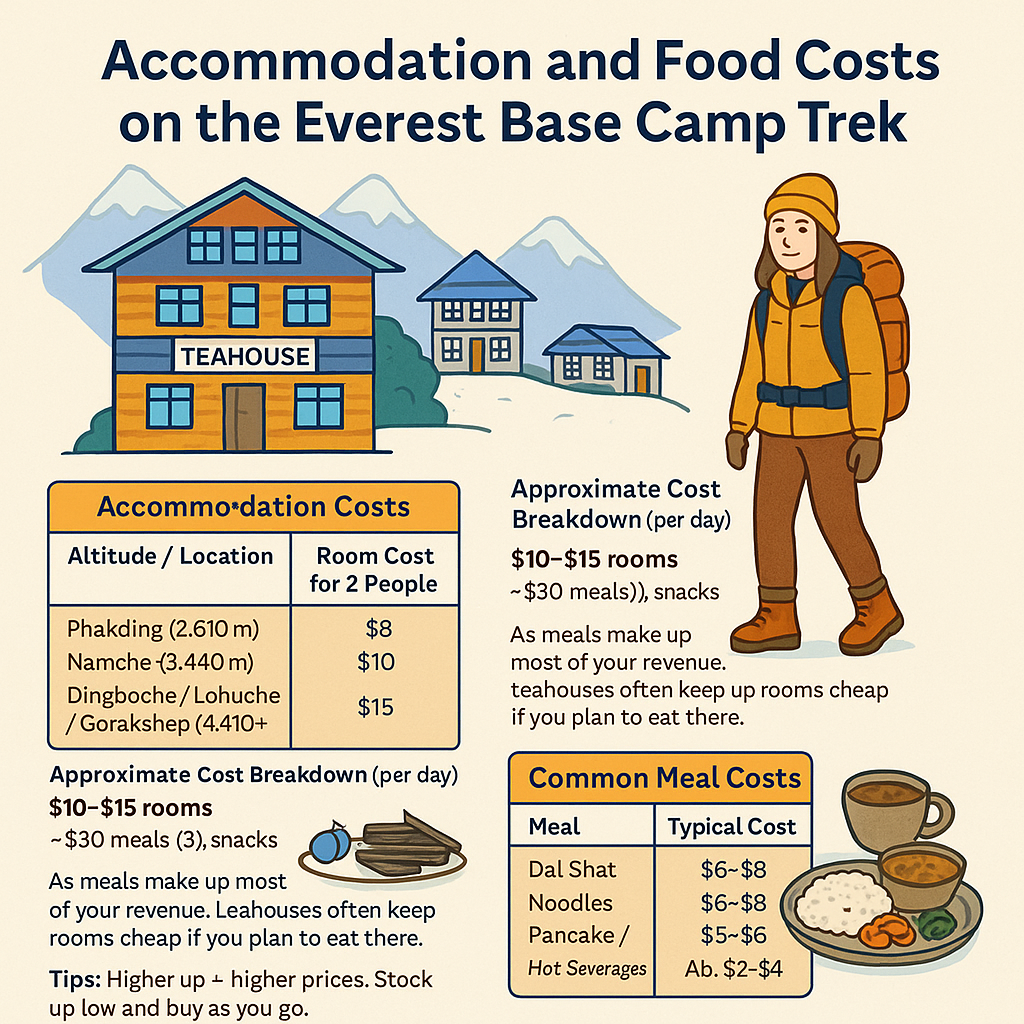
Low Altitude (Lukla–Namche): NPR 500–1000 ($4–8 USD)
-
Mid–High Altitude (Namche–Dingboche): NPR 1000–2000 ($8–15 USD)
-
High Altitude (Lobuche, Gorakshep): NPR 1500–3000+ ($12–25 USD)
What’s included?
Often just a simple bed. Many tea houses charge separately for everything else—from Wi-Fi and hot showers to battery charging.
“Most tea houses charge minimal room rates if you eat dinner and breakfast there—but during peak season, they won’t hesitate to charge full price if you don’t buy food or if the lodge is nearly full.”
Room Conditions:
-
Thin walls, no heating (unless you count the dining stove)
-
Shared toilets; clean varies
-
Blankets provided (but bring your own sleeping bag)
-
Altitude = less comfort. Lobuche and Gorakshep can feel like high-altitude bunkers.
🍛 Meals on the Mountain: Dal Bhat, Pizza, and Instant Noodles Galore
Meal Costs by Altitude (Typical Range):
| Location | Breakfast | Lunch/Dinner | Drinks (Tea, Coffee) |
|---|---|---|---|
| Lukla to Namche | NPR 400–600 | NPR 600–800 | NPR 150–300 |
| Tengboche to Dingboche | NPR 600–900 | NPR 800–1200 | NPR 200–400 |
| Lobuche & Gorakshep | NPR 700–1000 | NPR 1000–1500 | NPR 250–600 |
“In the higher villages like Gorakshep, expect dal bhat to cost around 1200–1500 rupees. Hot water alone might set you back NPR 300.”
Food Options:
-
Dal bhat (all-you-can-eat staple)
-
Instant noodles and fried rice
-
Pancakes, eggs, and porridge
-
Chow mein, momos, basic pizzas
-
Occasional surprises (pasta with yak cheese, Snickers pie)
Hidden Tip:
“We often split larger portions with our porter when we could. Tea house servings can be big.” – Trekker, April 2025
💡 The “Unofficial” Charges That Add Up
Be ready to pay extra for things you might take for granted:
-
Hot Shower: NPR 500–1000
-
Battery Charging: NPR 300–600 per device
-
Wi-Fi: NPR 500–1000/day (if available)
-
Boiled Water: NPR 100–400/liter
-
Toilet Paper: BYO or NPR 150–200 per roll
“We paid nearly NPR 2000 just for charging phones and a camera during the whole trek.”
Pro Tip:
Bring solar chargers and power banks. Also, bring reusable water bottles and purification tablets or Steripen to avoid buying boiled water every stop.
💰 Daily Budget Estimate (For Independent Trekkers)
| Budget Type | Accommodation | Food & Drinks | Extras (Wi-Fi, shower, etc.) | Total |
|---|---|---|---|---|
| Budget | $5–10 | $15–20 | $5 | $25–30/day |
| Mid-Range | $10–15 | $20–25 | $5–10 | $35–45/day |
| High | $15–25 | $30+ | $10+ | $50+/day |
Note: If you’re with an organized trekking company, these costs may be included in your package—but keep in mind that your guides and porters might still be paying out-of-pocket for their own food and lodging unless your agency provides them a stipend (many don’t).
🤝 The Ethics Behind the Bill: What Real Trekkers Are Saying
Many discussions online touched on something deeper than just cost: fairness.
-
Some porters are charged reduced rates (or sleep in kitchens), but not always.
-
Trekking companies often don’t pre-arrange staff food/lodging—guides and porters have to hustle.
-
Tea house owners are caught in the middle, often expected to give free services in exchange for business.
“Everyone’s trying to make a living—trekkers want it cheap, companies want profit, staff want free meals, and lodges just want to feed their families.”
The takeaway? If you can afford it, tip well and ask about your porter’s living conditions. That extra cup of tea or shared snack goes a long way.
Final Thoughts: What the Trail Teaches You About Value
While the EBC trek isn’t the cheapest journey you’ll take, it’s one of the most meaningful. Tea houses may not have luxury amenities, but they offer a warm bed, hot food, and often, the kind of camaraderie you’ll remember long after the snow melts.
So yes, budget wisely, but remember: every rupee you spend feeds a family, heats a stove, or gives a tired porter a better night’s rest.
That’s money well spent.