Winter trekking in Nepal isn’t just about stunning silence and snow-lined paths — it’s also about keeping your body warm, your energy high, and your spirits even higher. In the cold and at high altitudes, your food becomes your fuel, your medicine, and your comfort.
If you’re planning a vegetarian-friendly winter trek to Everest Base Camp, Annapurna Base Camp, or anywhere in the Himalayas, this is your guide to the best plant-based foods that will nourish and sustain you at altitude.
🌱 Why Your Food Choices Matter More in Winter
When temperatures drop and elevation rises, your body works harder to regulate heat, fight fatigue, and adjust to thinner air. That means:
-
You burn more calories — especially in sub-zero temperatures
-
You lose fluids faster — even when you’re not sweating
-
You need warming, slow-digesting meals to last the day
Let’s dive into the best vegetarian trekking foods that keep you warm, strong, and satisfied.
🥣 The Carbs That Keep You Going
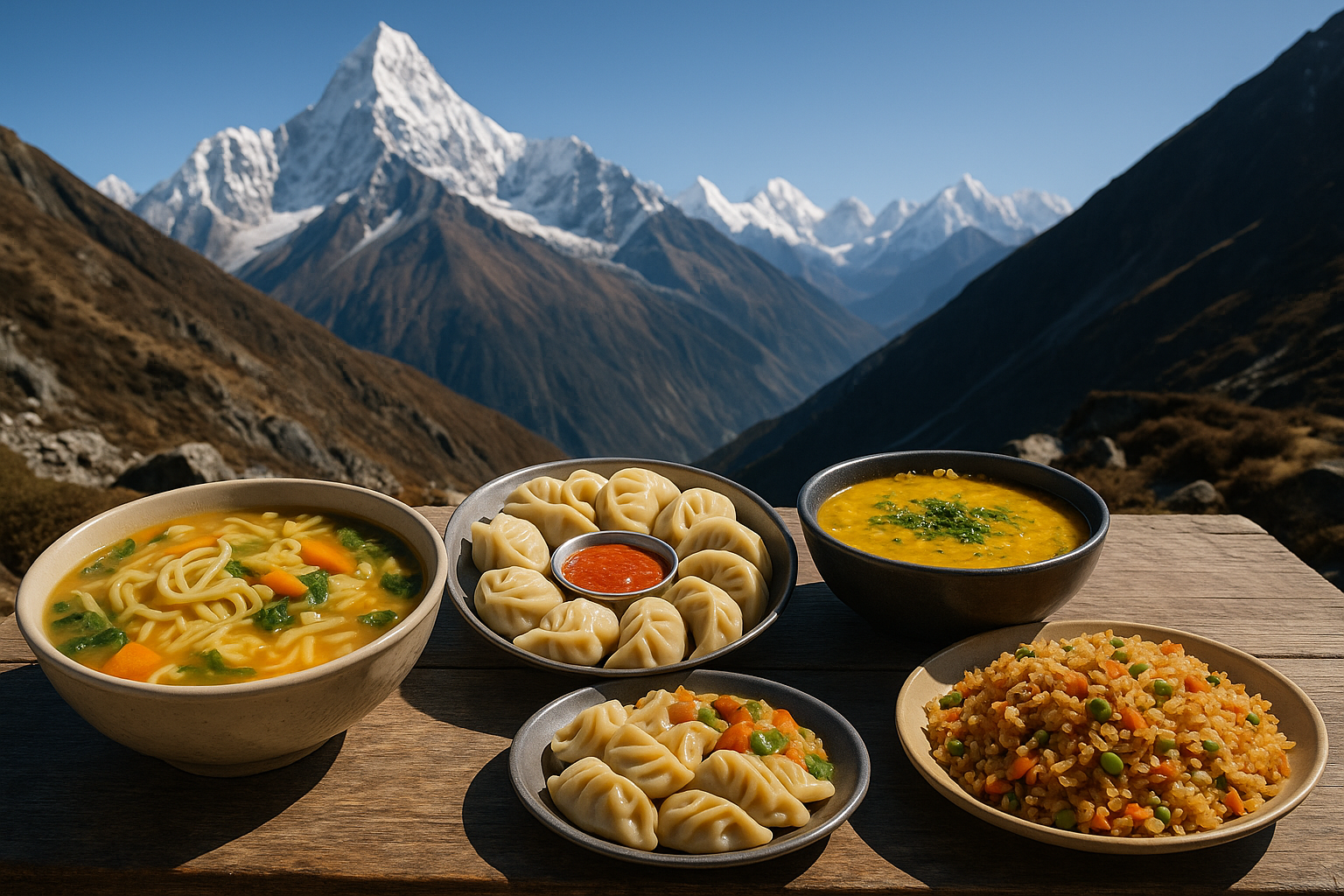
1. Dal Bhat (Lentil Soup with Rice and Veggies)
Nepal’s unofficial national dish is perfect for winter. You’ll find it everywhere, served hot, fresh, and in unlimited refills.
-
Lentils = protein + iron
-
Rice = fast-burning fuel
-
Veg curry = fiber + flavor
TrekHeaven Tip: Ask for extra ghee or an extra bowl of lentils — both boost energy and heat.
2. Tibetan Bread with Jam or Peanut Butter
This fried flatbread is light, fluffy, and incredibly filling. Paired with nut butters or local honey, it makes a warming and calorie-rich breakfast or snack.
3. Porridge (Oats, Semolina, Tsampa)
A hot bowl of porridge in the morning keeps you full and warm till lunch. Add in honey, dried fruits, or nuts for a tasty energy boost.
🧈 Plant-Based Fats for Warmth
4. Vegetable Thukpa
This noodle soup is hot, hydrating, and packed with root vegetables and spices. It’s a popular evening meal and often served with a bit of chili to warm your core.
5. Sherpa Stew (Shyakpa, Veg Version)
A slow-cooked stew of handmade noodles, carrots, potatoes, and leafy greens, Sherpa Stew is the ultimate comfort food at high altitudes.
6. Fried Rice or Noodles with Vegetables
Available everywhere, these simple dishes are high in carbs and easy on digestion. Great as a midday energy top-up.
7. Yak Cheese (Optional for Vegetarians)
While not vegan, yak cheese is a calcium-rich, fatty snack that’s available in most high-altitude teahouses. If you’re vegan, you can skip this and pack nut butters or seeds from Kathmandu instead.
🍵 Hot Drinks & Hydration Heroes
Staying warm and hydrated is essential at altitude. Most teahouses offer boiled water, herbal teas, and broths that hydrate and nourish.
8. Garlic Soup
Popular on the EBC route, garlic soup is believed to help prevent altitude sickness. Whether or not that’s true, it’s hot, salty, and comforting.
9. Ginger Honey Lemon Tea
Great for your throat, stomach, and circulation, this tea is a winter favorite. Drink it at every meal.
10. Black Tea or Milk Tea
Simple and satisfying. Many locals also drink salted Tibetan tea (buttered tea) — an acquired taste that can help replenish salt lost through exertion.
🍫 Best Veg Snacks to Carry
Pack smart snacks in your daypack. These provide quick energy, don’t freeze easily, and are easy to nibble on while hiking.
11. Energy Bars (Plant-Based)
Check labels in Kathmandu for vegan-friendly options. Or bring your own stash from home. Look for dates, oats, nuts, and seeds.
12. Roasted Soybeans, Peanuts, or Trail Mix
Buy in local markets — these are high-calorie, high-protein snacks that are easy to carry and eat on the go.
13. Chocolates & Local Biscuits
Dark chocolate or Nepali tea biscuits are cheap, satisfying, and give you that much-needed morale boost at the top of a snowy pass.
TrekHeaven Tip: Avoid snacks with excessive sugar or dairy if you’re sensitive at altitude. Simple carbs + fat = best combo.
🚫 What to Avoid
Even with great options, there are a few things to steer clear of in winter:
-
Cold drinks: Always go for warm or boiled water.
-
Raw salads or unwashed fruits: Hard to digest and often not hygienically prepared.
-
Meat: Meat at altitude may not be stored properly. Even if you’re not vegetarian, it’s best skipped on the trail.
🍛 A Sample Plant-Based Winter Trekking Meal Plan
| Time | Meal |
|---|---|
| Morning | Oat porridge + Tibetan bread + ginger tea |
| Trail Snack | Trail mix + dark chocolate + boiled water |
| Lunch | Dal Bhat (veg) + garlic soup + tea |
| Afternoon | Roasted peanuts + black tea |
| Dinner | Veg Sherpa stew or Thukpa + lemon honey tea |
| Before Bed | Warm soy milk or ginger tea |
🙌 Final Thoughts
Winter trekking on a vegetarian diet is not only possible — it’s incredibly rewarding. You’ll find the Himalayan menus more veg-friendly than you expect, and with the right meals, you’ll stay warm, energized, and altitude-ready.
So pack your hand sanitizer, headlamp, and your best appetite — and let the mountains feed your body and soul.
Need help planning a vegetarian-friendly trek in winter? From teahouse recommendations to gear checklists and local food tips, TrekHeaven has your back — no meat required.